Standing water on the floor or carpet that squishes when you step on it? The longer it sits, the more it costs to fix. Call or send a few details, and a local water damage pro will get back to you about getting it out.
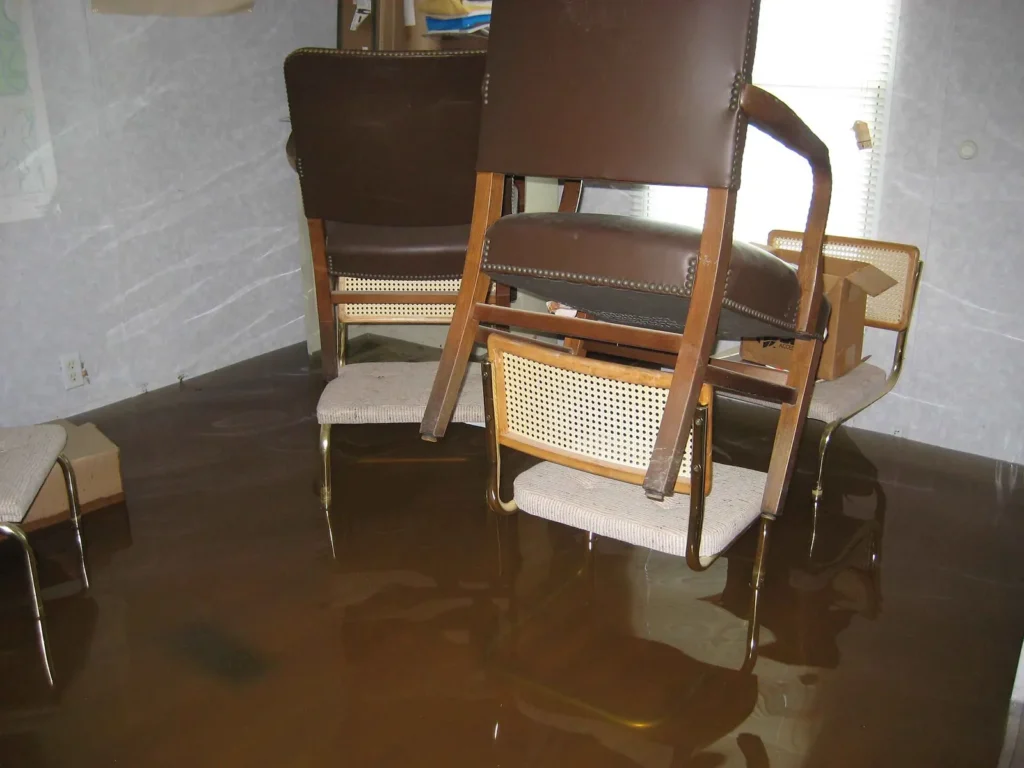
Getting the water out is only the start
Pumps and truck-mounted or portable extractors pull up the standing water and most of what’s in the carpet. That part is quick. The part people underestimate is what’s left behind in the carpet pad, the bottom of the drywall, the baseboards, and the subfloor.
That’s why a proper job keeps going after the floor looks dry. Expect air movers and dehumidifiers to run for a few days, and expect someone to come back with a moisture meter to check the walls and floor until they’re dry, not just dry to the touch. The EPA says water-damaged areas should be dried within 24 to 48 hours to keep mold from getting started.
Can the carpet be saved?
Often, if the water was clean and it’s dealt with quickly. The pad underneath usually soaks up the most and is cheap to replace, so it’s often pulled even when the carpet stays. If the water came from a sewer backup or from outside, the carpet and pad usually have to go. More on that on the sewage cleanup and flood cleanup pages.
While you wait
- Shut off the water at the main if it’s still running, and turn off power to any room where water is near outlets or cords.
- Get rugs, electronics, papers, and anything with sentimental value up off the floor.
- Put foil or a plastic lid under furniture legs so wood stain doesn’t bleed into wet carpet.
- Take photos and video of everything before it’s moved or thrown out. Your insurance company will want them.
- Don’t use a household vacuum on standing water.
The first 24 hours guide has the full list.
We cover north Fort Worth, Keller, Southlake, Colleyville, North Richland Hills, Roanoke, and the towns around them.
Water on the floor right now? Call or send the details.